
Why Most Businesses Have More Technology Risk Than They Realize
Many businesses believe they are safe because they have antivirus software, backups, or firewalls in place. Yet, the reality is that business technology risk often hides in places that get little attention. These overlooked areas can create serious security, compliance, and operational problems that disrupt business continuity and damage reputation.

Why Technology Risk Often Goes Undetected
Business leaders tend to focus on obvious threats like malware or phishing attacks. While these are important, many business cybersecurity risks come from less visible sources. For example, outdated software or forgotten user accounts can open doors to attackers. Without a thorough IT risk assessment, these vulnerabilities remain hidden.
Often, companies assume that having basic security tools means they are protected. This false sense of security leads to gaps in technology risk management. The IT environment is complex and constantly changing, so risks can appear quickly and quietly.
Common Hidden Technology Risks
Several common issues create hidden risks that many businesses overlook:
Former employees with active accounts: When employees leave, their access is sometimes not revoked. This leaves accounts open to misuse or hacking.
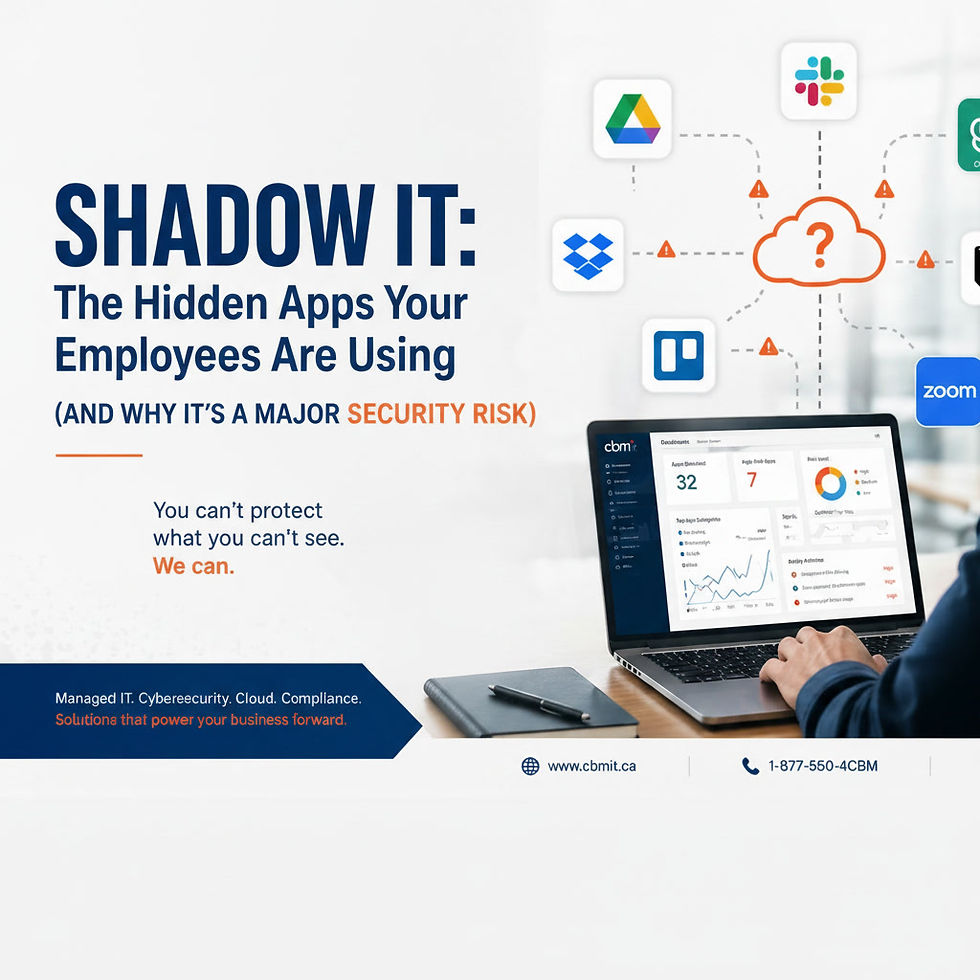
Unmonitored cloud applications: Shadow IT, where employees use cloud apps without IT approval, can expose sensitive data or introduce malware.
Misconfigured Microsoft 365 permissions: Incorrect settings in Microsoft 365 can give users more access than needed, increasing the chance of data leaks.
Unsupported hardware and software: Devices or programs no longer supported by vendors do not receive security updates, making them vulnerable.
Untested backup and disaster recovery systems: Backups that are not regularly tested may fail when needed, risking data loss and downtime.
Third-party vendor risks: Vendors with weak security can be an entry point for cyberattacks on your business.
Missing compliance documentation: Lack of proper records can lead to regulatory penalties and damage trust.
Employees using unauthorized AI or SaaS tools: New tools adopted without oversight can introduce unknown risks and compliance issues.
These hidden risks often accumulate unnoticed until they cause a problem.

The Business Impact of Hidden Risk
Ignoring these hidden risks can lead to serious consequences:
Downtime: Systems may crash or become unavailable, halting business operations.
Cybersecurity incidents: Data breaches or ransomware attacks can result from overlooked vulnerabilities.
Compliance violations: Missing documentation or poor controls can lead to fines and legal trouble.
Lost productivity: Employees may waste time dealing with technical issues or security incidents.
Unexpected costs: Emergency fixes, legal fees, and reputational damage can be expensive.
For example, a company with unmonitored cloud apps might suffer a data breach that exposes customer information, leading to regulatory fines and loss of customer trust.
Why Annual Assessments Are Not Enough
Many businesses rely on annual IT risk assessments to identify technology risks. While these reviews are useful, they are not enough. Technology environments evolve rapidly with new software, devices, and users added regularly.
Risks can emerge between assessments and remain unnoticed for months. Continuous monitoring and cybersecurity risk management are essential to catch issues early. Waiting for an annual review means problems may grow unchecked.
How Proactive IT Management Reduces Risk
Ongoing management of IT systems helps reduce business technology risk by:
Providing continuous security monitoring to detect threats quickly
Regularly reviewing compliance to ensure documentation and controls are up to date
Managing Microsoft 365 security settings to prevent unauthorized access
Testing backup and disaster recovery plans to guarantee data protection
Overseeing third-party vendor security to reduce external risks
Educating employees about safe technology use and risks of unauthorized tools
Managed IT services offer this proactive approach, combining expertise and tools to keep risks low. This approach helps businesses avoid costly incidents and maintain smooth operations.
Building a Long-Term Risk Management Strategy
A strong technology risk management strategy includes:
Regular risk assessments beyond just once a year
Documented processes for access control, backups, and compliance
Employee training on security best practices and approved tools
Strategic IT planning aligned with business goals
Partnering with managed IT services and IT compliance services providers
This ongoing effort helps businesses stay ahead of evolving threats and maintain a secure, compliant IT environment.
Final Thoughts
Understanding and addressing hidden technology risks is critical for any business. Relying solely on basic protections or annual reviews leaves gaps that cybercriminals and compliance issues can exploit.
By adopting continuous monitoring, proactive management, and a long-term strategy, companies can reduce business technology risk and protect their operations. Contact CBM IT today!

Comments